
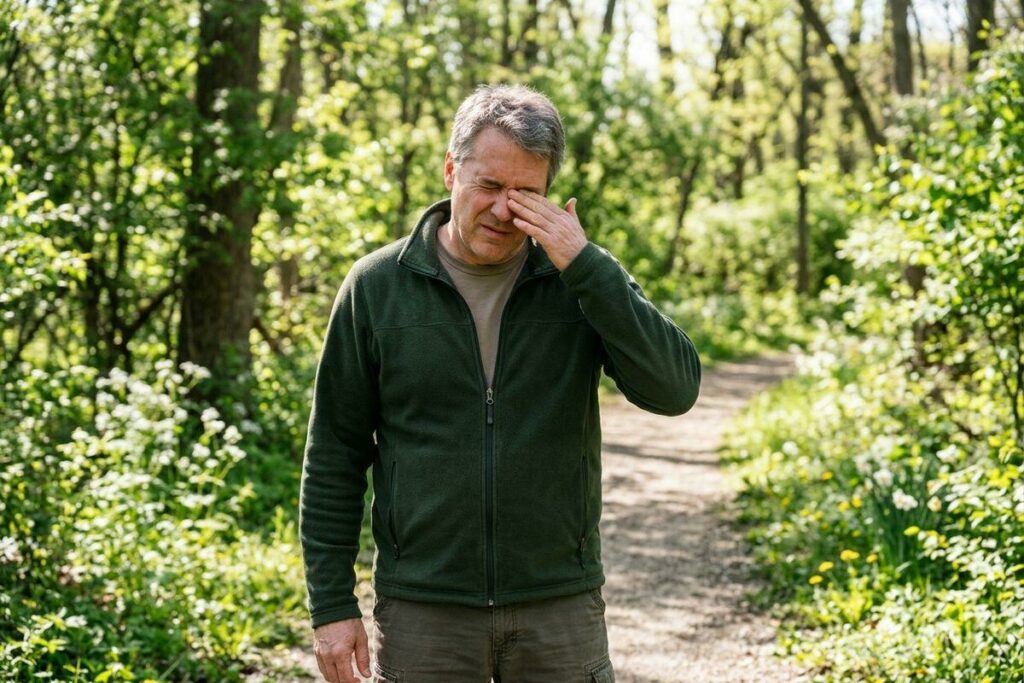
Allergy season can turn your eyes into an itchy, watery mess before you even notice pollen is the real problem. It’s easy to blame allergies for the sneezing and the stuffy nose, but they can mess with your tear film too.
Yes, allergies can cause dry eyes, because allergens trigger inflammation that throws off how your eyes make and hold onto tears.
When pollen or dust lands in your eyes, your body reacts with inflammation. That inflammation can slow down tear production. On top of that, your tears start to evaporate faster, so your eyes feel dry, gritty, and tired by the afternoon.
Common Allergens That Contribute to Dry Eye
The stuff floating around your home and neighborhood can set off this whole cycle. Some triggers hide in plain sight, like the dust on your bookshelf or the dander from your cat.
Watch for these usual culprits:
- Pollen
- Mold
- Dust mites
- Pet dander
- Smoke
- Some allergy medicines, like antihistamines
That last one surprises a lot of people. It’s why you have to be careful taking antihistamines when you’re already dealing with dry eye, as both the allergies and the pill can leave your eyes feeling parched.
Seasons That Bring More Symptoms
Certain times of year hit harder than others. Spring and early summer bring pollen peaks that coat cars and porches. Fall rolls in next with mold and ragweed, and those can keep symptoms going right up until the first frost.
Signs Your Dry Eye Come from Allergies
How do you tell allergy-related dryness apart from plain old tired eyes? The clues show up in how your eyes feel and look.
Watch for these signs:
- Itchy, burning, or gritty feeling
- Redness
- Blurry vision
- Puffy eyelids
- Watery eyes
Watery eyes might seem odd when the problem is dryness. Your eyes flood with tears to make up for the irritation, but those extra tears drain away fast and leave you dry again.
What Gets Mistaken for Dry Eyes
Not every dry, scratchy feeling comes from allergies. Long hours at a screen can make you blink less, and that dries out your eyes by the end of the workday.
Blepharitis, an inflammation along your eyelids, can also bring on redness, crusting, and irritation that look a lot like dry eye. Viral or bacterial pink eye causes similar redness and watering, but an infection is behind it instead of an allergen.
Since so many conditions overlap, get a proper look from your optometrist to know what’s really going on.
How an Optometrist Diagnoses the Cause
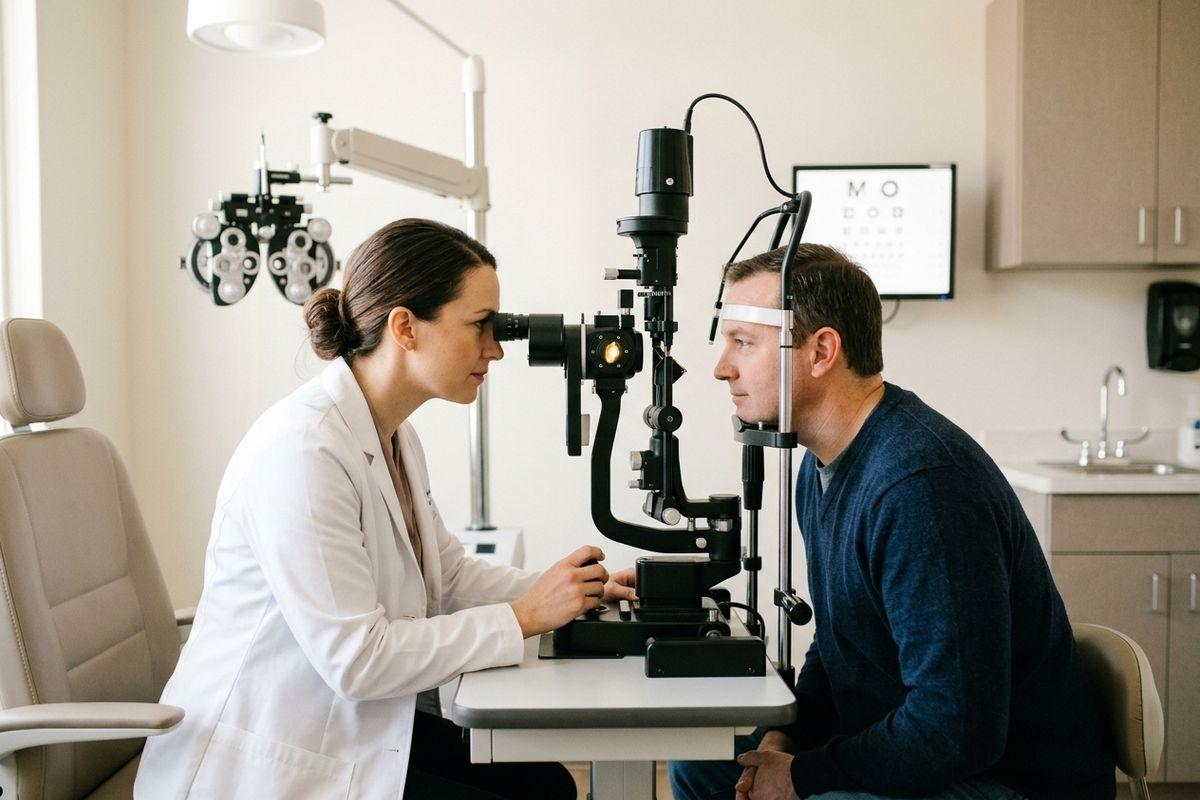
Guessing at the reason your eyes feel dry can lead you in circles. Schedule a comprehensive eye exam and get real answers instead.
During your visit, your optometrist can measure your tear quality and check how quickly your tears evaporate. Meibomian gland imaging shows the tiny oil glands along your eyelids, since blocked glands can add to dryness. Your optometrist will also ask about your symptoms and daily habits to spot allergy sources you may have missed.
With that full picture, you get a plan built around what’s actually going on with your eyes.
Ways to Relieve Allergy-Related Dry Eye
Relief often starts with small changes and grows from there. Try these ways to help your eyes feel better.
Simple Home Steps
A few everyday habits can take the edge off.
Use artificial tears to rinse away allergens and add moisture. Apply a cool compress to calm the itch and swelling. Wear sunglasses outdoors to block pollen, and run an air purifier indoors to clear dust and dander. Drink plenty of water and eat omega-3-rich foods, like salmon and walnuts, to support healthier tears.
In-Office Treatment Options
When home steps aren’t enough, your optometrist has more tools to help.
Prescription drops can calm the itch and inflammation that dry eyes bring on. Punctal plugs, tiny inserts that slow tear drainage, keep moisture on your eyes longer. Meibomian gland therapy helps clear those oil glands and can improve the quality of your tears.
The right mix depends on what your exam shows.
Give Your Eyes a Break This Allergy Season
Allergy season doesn’t have to leave your eyes sore and tired. Schedule a comprehensive eye exam and start feeling more comfortable, indoors and out.
Book your visit at Moses Eyecare Center, with 12 locations across Northwest Indiana, including Merrillville, Gary, Hebron, Lowell, Crown Point, Griffith, Glen Park, Winfield, Hammond, St. John, Valparaiso, and Portage. Our team is ready to help you and your family see and feel more comfortable.