

Key Takeaways
- Red, irritated eyes don’t automatically mean pink eye.
- Conditions like dry eye, allergies, blepharitis, and styes can share some symptoms with pink eye.
- Some serious conditions, like uveitis and angle closure glaucoma, can mimic pink eye symptoms and require prompt attention.
- The type of discharge, which eye is affected, and how symptoms developed can help narrow things down.
- Pain, vision changes, or worsening symptoms are signs to see an eye doctor promptly.
Pink Eye Symptoms vs. Something Else
Your eyes are red, watery, and uncomfortable. Your first thought might be pink eye, but that’s not always the right answer. At Moses Eyecare Center, we want you to understand that many eye conditions share the same surface-level symptoms, and getting the diagnosis wrong can mean the wrong treatment, or no relief at all.
Several common eye conditions, like allergies, dry eye, or a stye, as well as some serious eye conditions, like uveitis, can share symptoms with pink eye, making a proper eye exam the most reliable way to know what’s actually going on. If you’re unsure what’s causing your symptoms, a comprehensive eye exam can identify what may be going on and get you the right care faster.
Everyday Eye Conditions That Share Symptoms with Pink Eye
Dry Eye and Allergies
Dry eye is 1 of the most common culprits behind red, watery, and scratchy eyes that get chalked up to pink eye. It might sound backward that dry eye causes watery eyes, but when your eyes aren’t producing enough quality tears, they often overcompensate by flooding with reflex tears. The result can look like pink eye, but it’s another issue entirely and requires different treatment.
Allergic conjunctivitis is another frequent mix-up. It typically affects both eyes at once, often accompanied by a runny nose or sneezing. If your symptoms flare up every spring or fall, or after spending time outdoors, allergies are likely the reason, not an infection.
Blepharitis and Styes
Blepharitis is inflammation along the edges of your eyelids. It can cause crusty buildup, redness, and irritation that looks a lot like pink eye, especially in the morning when that crust has collected overnight. It’s a chronic condition tied to oil gland function along the eyelid margin, and it needs a different approach than treating an infection.
Styes show up as tender, swollen bumps near the lash line. They can cause discharge and redness around the eye, which is easy to confuse with pink eye at a glance. The key difference is that the tenderness and swelling stay concentrated near the eyelid edge rather than spreading across the white of the eye.
Subconjunctival Hemorrhage and Eye Growths
A subconjunctival hemorrhage happens when a tiny blood vessel on the surface of your eye breaks. The result is a bright red patch that can look alarming but typically causes no discomfort and no discharge. That’s a meaningful difference from pink eye, which often comes with some kind of discharge or watering.
Certain types of growths can also produce redness and irritation. These are tissue changes on the surface of the eye that develop gradually, often from sun exposure. Protecting your eyes from UV rays year-round can help reduce this kind of surface damage.
Serious Eye Conditions That Mimic Pink Eye
Uveitis and Keratitis
Uveitis is inflammation inside the eye, and it tends to cause redness concentrated around the iris rather than the widespread pinkish tinge of pink eye (conjunctivitis). It can also come with sensitivity to light and blurred vision, and if left untreated, it can affect your long-term vision, so it needs an eye doctor’s attention quickly.
Keratitis is inflammation of the cornea, which is the clear outer layer of your eye. Contact lens wearers are at higher risk of keratitis, which can cause significant discomfort, sensitivity to light, and vision changes that go beyond those of a typical case of pink eye. Both uveitis and keratitis need professional help to manage properly, so if you need guidance on your symptoms, it’s a good idea to book an eye exam.
Angle Closure Glaucoma and Blocked Tear Ducts
Sudden eye pain, halos around lights, nausea, and red eyes together are all associated with angle closure glaucoma, which is a medical emergency, not a case of pink eye. If you or someone in your family experiences this combination of symptoms, it’s important to seek emergency eye care promptly.
On the other end of the spectrum, blocked tear ducts are common in infants and young children and cause persistent watery eyes and discharge. Parents often assume it’s pink eye, but a blocked duct is a different issue. If your child has recurring eye symptoms, especially if you’ve tried treating them without any effect, booking a children’s eye exam is a great starting point for getting real answers.
How to Tell the Difference
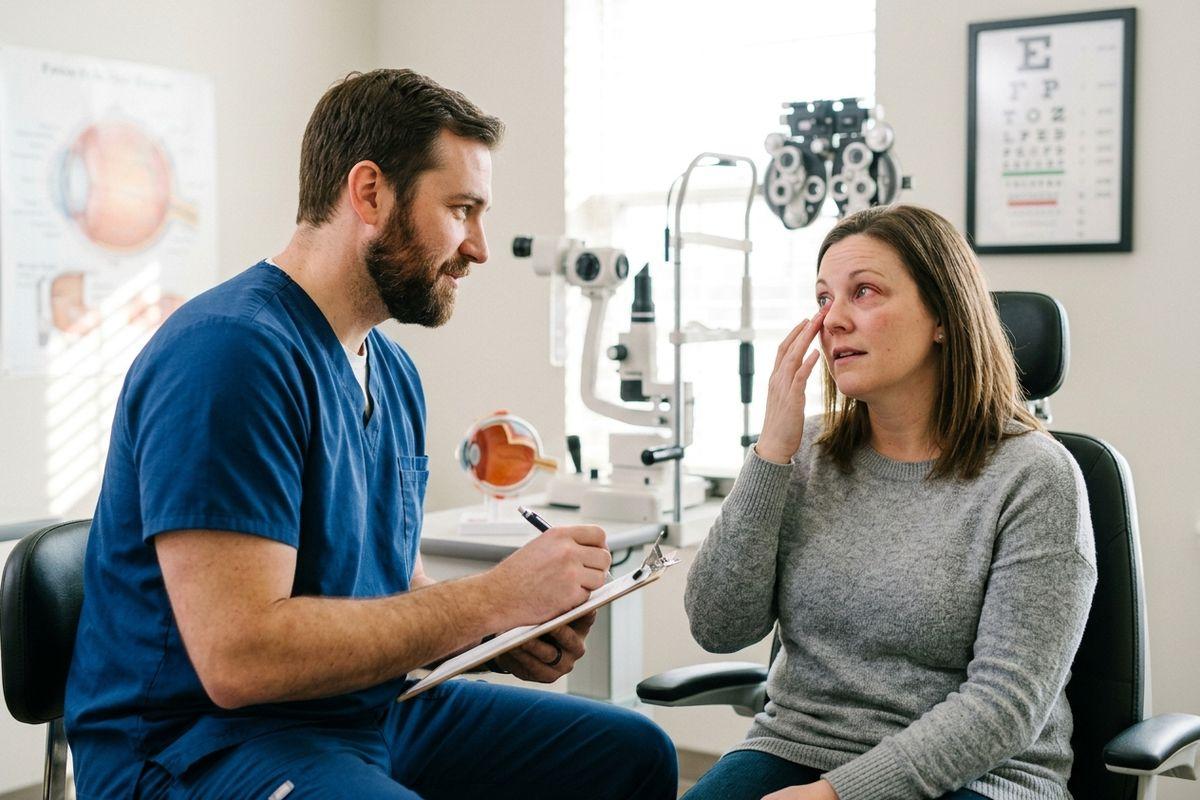
You can gather useful information before your appointment by paying attention to a few specific things. Look out for a few key signs:
- Note whether 1 eye or both eyes are affected, and whether the second eye developed symptoms shortly after the first, as this could signal pink eye.
- Look at the discharge. Is it thick and colored, or thin and watery? Does it appear in the morning, throughout the day, or after being outside? Bacterial pink eye is often associated with green or yellow discharge.
- Think about how symptoms started. Did they come on suddenly, or have they been building over days or weeks?
- Check for any pain, light sensitivity, or changes in your vision, since those symptoms often point to something beyond a typical infection.
This information helps an eye doctor narrow things down faster and get you to the right treatment sooner.
When to See an Eye Doctor in Northwest Indiana
Some symptoms shouldn’t wait for a scheduled appointment. Pain, noticeable vision changes, or strong sensitivity to light are signs that something more than irritation is happening. The same goes for symptoms in children that aren’t improving or are getting worse.
Schedule Your Visit
Moses Eyecare Center proudly serves patients across Northwest Indiana, including Merrillville, Gary, Hebron, Lowell, Crown Point, Griffith, Glen Park, Winfield, Hammond, St. John, Valparaiso, and Portage. If your eyes are giving you trouble and you’re not sure what’s going on, our team of eye care professionals can take a close look, give you a clear answer, and help you feel better. Don’t guess when it comes to your eyes or your family’s eyes. Book an appointment today.