
Key Takeaways
- A thin layer in your eye naturally stops lenses from getting stuck completely out of sight.
- Your everyday tears and simple blinking motions help shift misplaced lenses back into view.
- Clean hands and fresh cases keep your eyes feeling comfortable and refreshed every day.
- An eye doctor in Northwest Indiana can check your vision and evaluate your lens fit.
You rub your eye and suddenly realize your contact lens is missing. The panic sets in as you wonder if the lens somehow slipped behind your eye. This common fear happens to many people who rely on daily or monthly wear lenses, but the team at Moses Eyecare Center can help you safely manage it.
A contact lens does not get lost behind your eye because a clear natural barrier blocks objects from moving too far back. This protective wall safeguards your vision and makes finding a misplaced lens much simpler. You can find peace of mind knowing that contacts do not get lost anywhere behind this barrier.
Facts About Contact Lenses and Eye Anatomy
The Barrier Behind Your Eyelids
Your eye features a simple design to protect your vision. A thin membrane connects the inside of your eyelids to the white part of your eye. This creates a protective barrier that prevents objects from moving behind the eyeball.
- Thin clear layer acts like a safety net against dust and debris.
- Lenses do not slip behind the eyeball itself.
Natural Protection From Tears
Your body constantly produces fluid to help maintain healthy eyes.
This tear layer helps contact lenses move smoothly across the eye surface instead of sticking to the eye. Your eye uses this constant moisture to help keep everything moving smoothly and protect against dry eye conditions.
- Tears help keep your eyes pleasantly moist all day long.
- Extra moisture helps push trapped particles away from the center of your eye easily.
- Frequent blinks spread protective fluids evenly across the entire surface.
Signs of a Shifted Contact Lens
Common Sensations to Watch For
Sometimes a lens just slides under your upper or lower eyelid.
You might notice something feels slightly off right away. Recognizing the signs early helps you address the issue without rubbing or causing irritation. Paying attention to these subtle cues protects your eye surface.
- Sudden discomfort usually happens in one specific eye.
- Mild irritation or noticeable redness shows up quickly and might look similar to bacterial or viral conjunctivitis.
- Blurry vision occurs on just one side, unlike when dry eyes cause blurry vision across your entire field of sight.
Steps to Fix a Dislodged Contact Lens
Calm Nerves and Blink Rapidly
Taking a deep breath helps make the removal process much easier. Tense muscles make your eyelids squeeze shut tightly. Relaxing helps you gently coax the lens back to the center.
- Relax your eye muscles completely before trying to look for the piece.
- Keep hands away from the sensitive area to help prevent accidental scratches.
- Blink fast a few times to help the lens shift back into view.
Rinse and Remove the Lens
Adding moisture helps free a stuck lens easily.
Dry plastic clings to the eye surface tightly. A few drops of liquid help loosen the grip safely. Giving the eye plenty of hydration makes sliding the lens painless.
- Wash hands well with plain soap to remove dirt and oils, following proper contact lens care guidelines.
- Apply gentle contact solution drops directly into the affected eye.
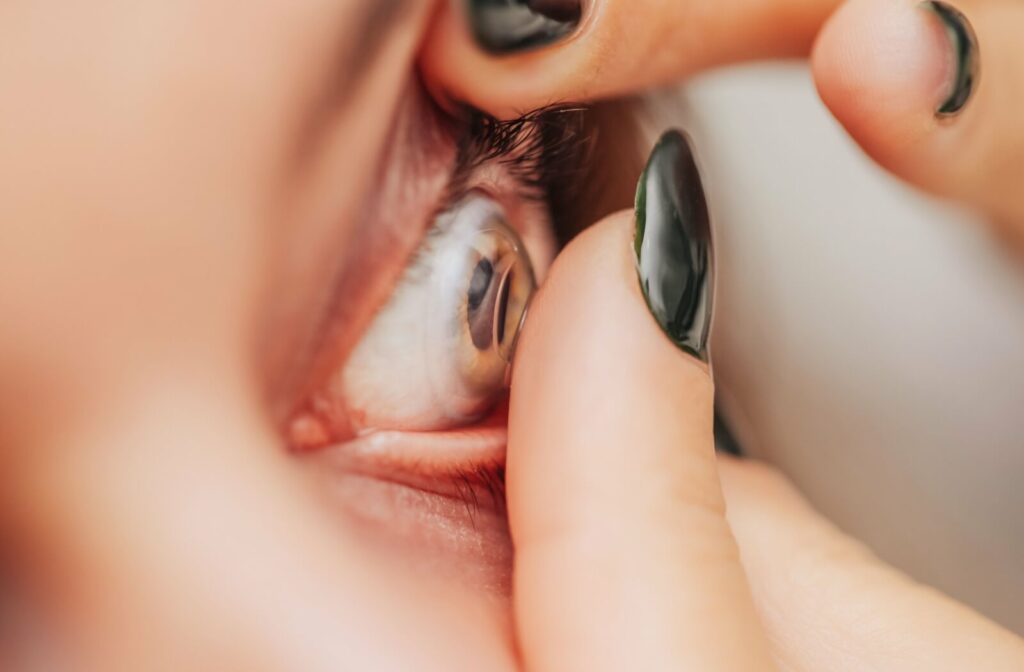
- Take the lens out very carefully once it glides back to the middle.

Simple Habits for Daily Lens Care
Clean Hands and Fresh Cases
Good hygiene helps keep your vision sharp and your eyes comfortable. Many people forget that cases harbor bacteria over time. Proper daily cleaning routines support healthy wearing experiences.
- Wash hands with warm water before touching your face.
- Swap your lens case every 3 months to help prevent buildup.
- Keep your contact cases completely dry when not holding lenses.
Safe Sleep and Water Practices
Water and closed eyes create problems for contact wearers. Lenses absorb tap water or pool water quickly. Sleeping in contact lenses can reduce oxygen flow to the cornea and increase the risk of irritation or infection.
- Take contacts out before bedtime to let your eyes breathe.
- Remove lenses before swimming or showering.
- Follow the schedule your doctor sets for fresh replacement pairs when you order contact lenses.
When to See an Eye Doctor in Northwest Indiana
Persistent Discomfort After Removal
Sometimes the eye still feels scratchy even after removing the lens.
This feeling might mean a tiny scratch happened while the lens moved around. The team at Moses Eyecare Center can evaluate the situation gently.
- Noticeable discomfort continues long after taking the lenses out.
- Redness stays visible for several hours without fading away.
- The team checks for minor surface scratches safely using specialized lights.
Routine Checkups for Healthy Eyes
Yearly visits help keep your prescriptions accurate and comfortable. Your eye shape can change gradually over the years. A professional evaluation spots fitting issues early on, and comprehensive eye exams help detect underlying health conditions before symptoms appear.
- Schedule regular visits with an eye doctor in Northwest Indiana to monitor changes.
- The doctor checks how your current contacts fit across the surface.
- Consistent exams help maintain comfortable vision alongside your favorite pair of glasses.
Finding the right eye care team makes wearing contacts a breeze.
The friendly staff at Moses Eyecare Center provides comprehensive support for families across their twelve convenient locations. Our clinic proudly serves patients across Northwest Indiana, including Merrillville, Gary, Hebron, Lowell, Crown Point, Griffith, Glen Park, Winfield, Hammond, St. John, Valparaiso, and Portage. You can schedule an appointment today to help keep your eyes healthy and comfortable all year long.