
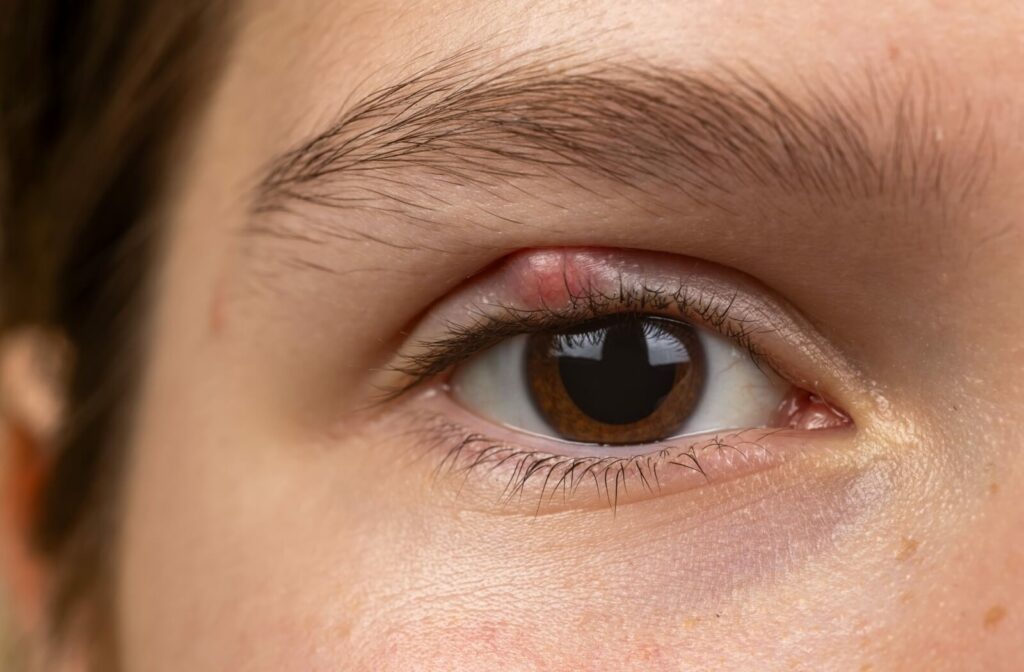
A gritty, sandy feeling in your eyes is often caused by blockages in the tiny oil-producing glands (the meibomian glands) along your eyelids.
You can help unclog meibomian glands with a consistent routine of warm compresses, gentle massage, and proper eyelid hygiene at home. However, professional treatments may be needed for lasting relief.
Our team at Moses Eyecare Center is here to help you with dry eye syndrome.
What Are Meibomian Glands & Why Do They Matter?
Lining the rims of your upper and lower eyelids are dozens of tiny glands called meibomian glands. Their job is to release a special oil that coats the surface of your eyes. This happens every time you blink.
This oil is a vital part of your tear film, as it forms a smooth, protective layer over your tears that stops them from evaporating too quickly.
Signs Your Meibomian Glands Are Clogged
When the meibomian glands get blocked, the oil that they produce has nowhere to go. This condition, known as meibomian gland dysfunction (MGD), is a common cause of dry eye symptoms.
What a Blocked Gland Feels Like
- A sandy or gritty feeling, as if something is in your eye
- Itchy, burning, or red eyes
- Puffy or swollen eyelids
- Blurry vision that seems to get better when you blink
- Watery eyes that tear up for no reason
- More irritation when you wear your contact lenses
Why Do Meibomian Glands Get Clogged?
As you get older, your meibomian glands sometimes produce less oil, while other age-related changes can also affect tear production. Hormonal changes can also affect the oil’s consistency, making it thicker and more likely to create a clog instead of flowing freely.

At-Home Care & Prevention for Healthy Glands
You can start with a few simple techniques at home to help soften the trapped oil and get it flowing again. The most important part of at-home care is doing it consistently.
- Use a Warm Compress: Place a warm, moist washcloth or a microwaveable eye mask over your closed eyelids for about five minutes. The steady heat helps melt the oil blocking the glands.
- Try a Gentle Massage: Immediately after the compress, use your clean fingertips to apply light pressure to your eyelids. Massage gently along your lash line to help push the softened oil out.
- Clean Your Eyelids: Gently wash your eyelids with a dedicated eyelid cleanser or a mild, tear-free soap. This helps clear away any oil, debris, or bacteria that could block the gland openings.
You can help keep future blockages at bay with a few small changes to your routine. These supportive habits are good for your overall eye health, too.
Stay Hydrated & Eat Well
Drinking plenty of water throughout the day helps keep your entire body hydrated—and that includes your eyes. A diet that supports healthy living for healthy eyes, including foods rich in omega-3 fatty acids, can also help improve the quality of the oil that your glands produce.
Take Regular Screen Breaks
If you spend a lot of time in front of a screen, remember the 20-20-20 rule: Every 20 minutes, look at something 20 feet away for at least 20 seconds. This simple habit encourages you to blink fully, which helps keep your tear film stable.
When to See a Professional for Clogged Glands
If your symptoms don’t get better with at-home care, a professional can offer in-office treatments for dry eye. As your eye doctor in Northwest Indiana, we have the tools to take a closer look at your meibomian glands and recommend a plan for relief.
In-Office Treatments Can Help
Your eye doctor can perform procedures designed to clear obstructions effectively. For example, treatments like Intense Pulsed Light (IPL) use gentle light to reduce inflammation and open the glands. Other options use a combination of therapeutic heat and pressure to restore healthy oil flow.
You don’t have to live with the discomfort of clogged meibomian glands. Our team at Moses Eyecare Center is ready to help you find a solution that works. Schedule an appointment at one of our 12 convenient locations to get the personalized care you and your family deserve.